

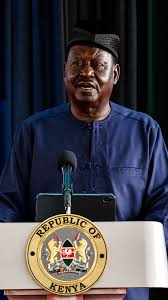
Former Kenyan Prime Minister Raila Odinga, one of the most influential figures in Kenya’s political landscape, has died at the age of 80. Family sources confirmed that Odinga passed away on Wednesday while receiving medical treatment at a hospital in India.
Speculation about his health had intensified in recent weeks, though his family and close associates had consistently dismissed reports of critical illness.
Fondly called “Baba” (Father), “Agwambo” (Act of God), and “Tinga” (Tractor) by his supporters, Odinga was a dominant force in Kenyan politics for decades. A tireless campaigner and seasoned mobiliser, he contested the presidency five times without success, often alleging electoral malpractice and advocating for electoral reforms.
In 2017, his long fight for electoral justice was partly vindicated when Kenya’s Supreme Court annulled the re-election of then-President Uhuru Kenyatta, a decision Odinga hailed as a victory for democracy. However, he later boycotted the rerun, citing unaddressed irregularities.
Known for his ability to reconcile with rivals, Odinga forged alliances even after heated political battles. Following his 2022 defeat, he reached an agreement with President William Ruto to form a “broad-based government,” bringing some of his allies into key government roles—a move he defended as vital for national unity after violent protests.
Earlier in 2025, Odinga received the Ruto administration’s backing in his bid to chair the African Union Commission. Despite enjoying considerable regional support, he lost the position to Djibouti’s Mahmoud Ali Youssouf.
A central figure in Kenya’s pro-democracy movement, Odinga’s political career was marked by endurance and sacrifice. He was detained twice under President Daniel arap Moi’s regime from 1982 to 1988 and again from 1989 to 1991 making him Kenya’s longest-serving political prisoner. His first detention, linked to an alleged coup attempt in 1982, catapulted him to national prominence.