


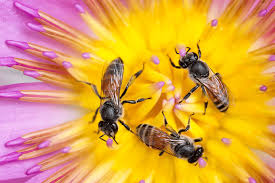
Nigerians have been cautioned against the deliberate extermination of bees, as the declining bee population poses a major threat to food security, biodiversity, and environmental balance.
The warning came during the 2025 World Bee Day celebration on Tuesday, delivered by the Mandate Secretary of Agriculture and Rural Development, Federal Capital Territory Administration (FCTA), Mr. Abdullahi Ango. He was represented by the Acting Permanent Secretary, Mrs. Anne Ijeoma.
Ango, who also chairs the Technical Committee of the FCT Agro-Climatic Resilience in Semi-Arid Landscapes (ACReSAL) Project, said this year’s theme, “Bee Inspired to Nourish Us All,” underscores the critical role of bees in nutrition and sustainable agriculture.
“Scientific evidence shows bees are indispensable to human survival. They pollinate over 75% of our food crops and support the livelihoods of millions of farmers globally,” Ango said.
He warned that despite their significance, bee populations are under threat from habitat destruction, harmful pesticides, climate change, and diseases. Beyond their ecological importance, he noted, beekeeping—or apiculture—is a viable commercial activity that can create jobs and boost income, especially in rural communities rich in forest resources.
“This initiative not only empowers youths and farmers but demonstrates the FCTA’s commitment to sustainable apiculture and environmental conservation,” he said. “Our ultimate goal is to promote pollinator-friendly practices that safeguard bee populations and ensure food security.”
In her welcome address, FCT ACReSAL Project Coordinator, Mrs. Caroline Opara, emphasized the need to promote apiculture as both a livelihood opportunity and a conservation practice. She called for the engagement of schools, youth groups, farmers, and forest stakeholders in pollinator-friendly activities, and encouraged partnerships among government agencies, NGOs, and the private sector to scale up bee conservation initiatives.
“Apiculture aligns with the project’s vision of sustaining non-timber forest products while preserving biodiversity and empowering local communities,” Opara added.
Also speaking, the Conservator-General of the National Park Service (NPS), Dr. Ibrahim Goni—represented by Assistant Conservator-General, Mr. Oladipo Cornelius—described bees as “nature’s tireless workers” that maintain ecological balance through pollination and biodiversity support. He expressed concern over growing threats to bee populations due to habitat loss, unsustainable agricultural practices, and climate-related challenges.
“The National Park Service remains committed to providing safe habitats for wild bees and other pollinators to support forest regeneration and ecosystem health,” Goni assured.
In his remarks, the Director of Forestry at the Federal Ministry of Environment, Dr. Ama Moses—represented by Chief Forest Superintendent, Mr. Okunuga Mathew—urged stakeholders to protect the environment, conserve biodiversity, and promote food security by supporting bee-friendly policies and practices.