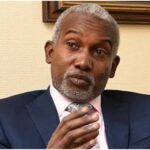


A former Chief of Army Staff and ex-Minister of Interior, Lt.-Gen. Abdulrahman Bello Dambazau (rtd), has described the killing of Boko Haram founder, Mohammed Yusuf, after his arrest in 2009, as a “police error” that triggered the escalation of insurgency in Nigeria.
Dambazau made the remark on Tuesday in Abuja while delivering a keynote address at the 7th Annual Lecture of the Just Friends Club of Nigeria (JFCN), themed “Nigeria’s Security Challenges and the Quest for National Cohesion: A New Paradigm for Internal Security Architecture and Governance.” The event was chaired by former NTA Director-General and founder of Tonnie Iredia University, Benin City, Prof. Tonnie Iredia.
Recalling the early days of the Boko Haram crisis, Dambazau said the insurgency began as a minor local confrontation in Maiduguri between the police and followers of Mohammed Yusuf over enforcement of a crash-helmet law, but spiraled into a full-blown rebellion due to poor policing and governance failures.
“Boko Haram started as a local issue triggered by a simple crash-helmet law. Some of Mohammed Yusuf’s followers were on their way to bury one of their dead without helmets. The police confronted them, shots were fired, and a few were killed or injured. Yusuf swore revenge, and weeks later, attacks on police stations began,” Dambazau said.
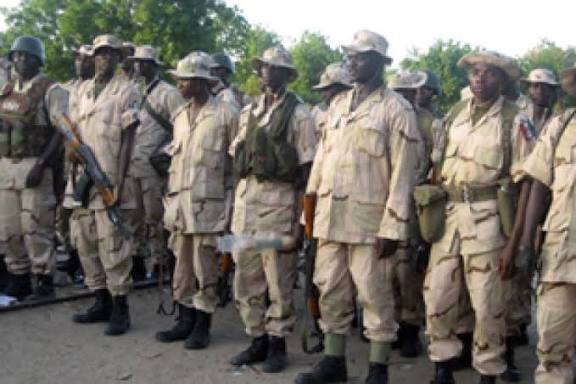
He recounted that the late President Umaru Musa Yar’Adua later ordered a military operation to dismantle Boko Haram’s base in Maiduguri.
“I was in China when I got the call to clear their enclave. We did, and arrested Mohammed Yusuf along with others. As soldiers, we handed them over to the police because we were not to detain them. Unfortunately, the police executed them on camera. Those images circulated globally, drawing sympathy for the group and aiding recruitment. What could have been solved locally turned into a national tragedy,” he added.
Turning to the banditry crisis in the North-West, Dambazau said it stemmed from years of neglect, poverty, and weak governance. He condemned the increasing use of soldiers for routine policing, saying it had distorted their constitutional role.
“You can’t solve insecurity by bullets alone. Banditry thrives on unemployment, hunger, poor education, and weak local administration. The military is overstretched because the police, who should handle internal security, are underfunded and politicised,” he noted.
The former minister also criticised both the executive and legislative arms for poor management of security budgets.
“Billions are allocated yearly, but insecurity persists. Many defence items are contractor-driven, inserted by lawmakers without consulting the services, and often irrelevant to operational needs. Barely 40 per cent of approved budgets are released. We can’t solve insecurity without investing in people,” Dambazau stated.
He also dismissed Western claims of a “Christian genocide” in Nigeria as propaganda, saying, “America protects its own interests; Nigeria must define and defend hers.”
In his remarks, retired Air Vice Marshal Gbolahan Adekunle, a former Chief of Policy and Plans at the Nigerian Air Force, decried the demoralisation of security personnel and the wastage of resources spent on officers who are retired soon after expensive training.
“It costs about $114 million to train one officer for strategic deployment, yet many are retired within six years. That’s how we lose our best hands,” Adekunle said.
He cited a 2024 incident in Gwoza, Borno State, where three radicalised teenage girls detonated bombs in a public place, stressing that Nigeria’s fight is against an ideology, not a conventional army.
Also speaking, Prof. Okey Ikechukwu of Nnamdi Azikiwe University blamed the persistent gap between government and citizens for poor intelligence cooperation, adding that the global arms trade continues to fuel conflicts in Africa.
The President of JFCN, Fred Ohwahwa, expressed concern over recent threats of a U.S. military invasion allegedly made by President Donald Trump. He urged Nigerians to confront insecurity decisively to prevent any foreign interference.
Ohwahwa reaffirmed the club’s commitment to promoting national dialogue, civic responsibility, and collective engagement in addressing Nigeria’s security and governance challenges.