

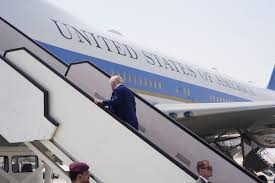
Preparations are underway to retrofit a Boeing jumbo jet donated by Qatar for potential use as Air Force One by former U.S. President Donald Trump—a move that has sparked bipartisan criticism and raised legal and ethical concerns.
Valued at $400 million, the aircraft will be handed over to the U.S. government “as is” under a memorandum of understanding (MOU) between Qatar and the Pentagon. While the Qatari government insists the donation is “unconditional” and free of influence, critics from both major parties—and even some Trump allies—have denounced the move as improper, with some describing it as a form of bribery.
“This is skeezy,” said conservative commentator Ben Shapiro. “Qatar didn’t just give Trump a $400 million plane out of the goodness of their hearts.”
Though the aircraft itself is a gift, the cost of retrofitting it to meet the stringent requirements for Air Force One—including advanced communications, nuclear blast protection, and mid-air refueling—will be borne by the U.S. government. Experts estimate the modifications could cost hundreds of millions, possibly up to $1 billion.
A defense official, speaking anonymously, indicated that part of the funding may be diverted from the Sentinel program, which is focused on modernizing the U.S. intercontinental ballistic missile arsenal.
The Pentagon has pledged to conduct extensive security checks to ensure the aircraft is free of espionage equipment. The MOU also states explicitly that the donation does not constitute bribery, undue influence, or corruption.
Nevertheless, legal scholars and lawmakers are raising red flags. Under the U.S. Constitution’s Emoluments Clause, federal officials cannot accept gifts of significant value from foreign states without congressional approval.
“Any gift of this nature must be approved by Congress,” said Senator Adam Schiff, citing constitutional concerns.
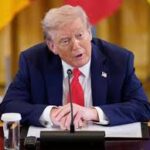
Trump has dismissed the backlash, describing the offer as a “great gesture” and stating he’d be “stupid” to reject it. The White House maintains the donation is legal, with Press Secretary Karoline Leavitt saying earlier that “any donation to the government is always done in full compliance with the law,” though legal details are still being finalized.
To quell the controversy, Trump has proposed donating the jet to his presidential library once he leaves office. While presidential libraries typically house documents and memorabilia, the inclusion of such an expensive aircraft would be unprecedented.
“It’s going to the library,” Trump reportedly said, framing the plane as a future historical artifact, not a personal benefit.
Criticism has also come from within Trump’s conservative base. Right-wing activist Laura Loomer called the donation a “stain” on the Trump administration, questioning Qatar’s motives.
While the U.S. has long planned to upgrade its aging presidential aircraft—two Boeing 747-200s in service since 1990—Trump previously clashed with Boeing over costs and delays. In February, he floated the idea of acquiring a new jet through alternative means. The Qatari donation now appears to be his solution.
Still, the political fallout may not fade quickly. “This sets a dangerous precedent,” warned a defense expert. “If foreign governments begin donating high-value assets to U.S. leaders, it blurs the lines of influence and accountability.”
Whether Congress will take action remains uncertain, but the controversy surrounding the Qatari jet has already cemented its place as one of the most debated aircraft in modern American politics.