

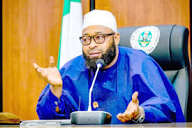
Niger State Governor, Alhaji Mohammed Bago, has vowed not to negotiate with or pay ransom to bandits for the release of kidnapped victims, insisting that doing so would only embolden criminals.
His position follows the kidnappers’ demand for a ₦400 million ransom in hard currency for four prominent indigenes of the state who have been held captive for four weeks.
“I will not negotiate with bandits. I will not pay ransom. The moment we start paying, they will open shop on our heads and keep kidnapping people,” Bago said in a statement issued in Minna by his Special Adviser on Print Media, Aisha Wakaso.
Describing banditry in Niger State as “a state of war that requires collective resistance,” the governor made the remarks during a condolence visit to Rijau and Magama local government areas, where bandit attacks recently claimed lives and displaced residents.
He urged communities to take a stand in defending themselves, stressing that ransom payments only fuel the cycle of abduction. “It is a constitutional duty of government to protect lives and property, and I will go all out to do that. We are surrounded by enemies, but we will not give up,” he declared.
Bago described the displacement of residents as “embarrassing and unacceptable” and announced plans to recruit and train 10,000 members into the Joint Task Force (JTF) to strengthen security operations across the state.
He also imposed a total ban on mining activities in Zone C, which includes eight local government areas Magama, Kontagora, Rijau, Wushishi, Mariga, Borgu, Mashegu, and Agwara citing illegal mining as a major driver of insecurity.
The governor assured victims of recent attacks of government support, promising compensation for bereaved families, medical care for the injured, and assistance for those who lost their livelihoods.
The latest kidnapping incident involves a member of the Niger State Independent Electoral Commission, his daughter, their driver, and a former member of the State Universal Basic Education Board, for whom abductors are demanding ₦400 million.