

Aid organisations, including the World Food Programme (WFP), have raised concern over a deepening hunger crisis in Nigeria, warning that hundreds of thousands of children could die as international funding continues to decline.
The situation is particularly severe in northern Nigeria, where years of violence by terrorist groups have displaced millions of people. According to the WFP, about 600,000 children are currently at risk of dying from severe malnutrition.
“There are millions of people who need our help,” said Ancel Kats, the WFP representative in Nigeria. “But the funding isn’t forthcoming.”
Until earlier this year, the United States provided more than half of Nigeria’s humanitarian assistance. However, a few weeks after his inauguration, President Donald Trump announced the dismantling of the U.S. Agency for International Development (USAID), sparking a sharp decline in foreign aid. Several other Western countries have since reduced their development budgets.
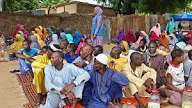
As a result, the WFP has closed over 150 malnutrition clinics across Nigeria and faces a funding gap of more than $115 million. In Bama, Borno State, food distribution efforts have been drastically scaled back, leaving only the most vulnerable families eligible for aid.
“They all depend on WFP to distribute this food for them to eat,” said Soumbami Tukunabo, an aid worker with the Italian humanitarian organisation InterSOS. “It would be very bad to tell them that due to global funding cuts there is going to be a reduction in caseload.”
Beyond food assistance, Nigeria has also lost an estimated $600 million in health funding almost one-fifth of its national health budget since the withdrawal of U.S. support. Aid agencies warn that unless urgent international funding is restored, millions of Nigerians could be pushed further into hunger, malnutrition, and extreme hardship.