

Gaza City – A 17-year-old Palestinian boy, Atef Abu Khater, has died from starvation in Gaza, as the humanitarian situation in the besieged enclave continues to deteriorate. Hospital authorities and family members confirmed that the teenager, once a promising local sports champion, succumbed to acute malnutrition on Saturday at al-Shifa Hospital.
Abu Khater’s weight reportedly dropped from 70kg to just 25kg — the average weight of a child under 10 — before his death. “He used to be a local sports champion. His condition deteriorated drastically until he became severely malnourished and eventually passed away,” a correspondent reported.
Footage shared by journalist Wisam Shabat on social media showed Abu Khater’s frail body in a white body bag, with family members grieving at his bedside. The video revealed his protruding bones, highlighting the severe impact of prolonged starvation and lack of medical care.
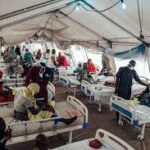
The director of al-Shifa Hospital stated that Abu Khater was one of at least seven people who died of starvation in Gaza within the past 24 hours. According to Gaza’s Health Ministry, a total of 169 individuals — including 93 children — have died from hunger-related causes since the conflict intensified in October 2023.
The United Nations and other humanitarian agencies have blamed Israel’s restrictions on aid for the worsening famine, despite recent, limited efforts to allow more aid into the territory.
Philippe Lazzarini, Commissioner-General of the UN Relief and Works Agency for Palestine Refugees (UNRWA), described the crisis as a “manmade famine,” accusing Israel of systematically blocking UN-led aid efforts. He criticized the introduction of the Gaza Humanitarian Foundation (GHF) — a US and Israeli-backed organization — as a politically motivated replacement for traditional aid systems.
“Israel is deliberately preventing the UN and humanitarian organizations from delivering life-saving aid,” Lazzarini posted on social media. “This is collective punishment, and a political decision must now be made to unconditionally open the crossings.”
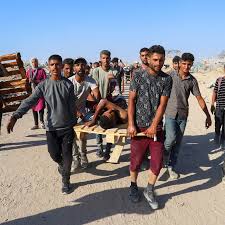
According to UN data, over 1,300 Palestinians have reportedly been killed since May while attempting to access food at GHF-run distribution points.
In Deir el-Balah, central Gaza, journalist Hind Khoudary reported that families are increasingly desperate for food and water. “Dozens of people, including babies, are dying slowly. One such case is Misk al-Madhoun, a five-year-old girl suffering from severe malnutrition,” she said.
Khoudary added that many mothers have resorted to feeding their infants only water due to the lack of milk or formula. Others undertake daily journeys in extreme heat, searching for food amid widespread shortages and risks of violence.
“Even reaching GHF distribution sites carries risks of injury or death, and many still return empty-handed,” she said.
A recent report by the Integrated Food Security Phase Classification (IPC), a global authority on hunger, confirmed that Gaza has entered official famine conditions. The IPC warned that acute malnutrition and insufficient food consumption have reached critical levels across most of the territory, particularly in Gaza City.
Despite criticism, Israeli authorities say they are increasing aid deliveries, including via airdrops. However, humanitarian organizations argue that such efforts are insufficient and dangerous, and continue to call for open and secure land routes for large-scale aid delivery.
As families across Gaza continue to bury loved ones like Atef Abu Khater, the toll of the crisis grows steadily — one life, one family at a time.