


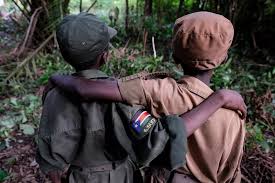
The United Nations (UN) has reported that at least 1,364 children were recruited by armed groups across six West African countries in 2024. Within the same period, the region recorded 466 cases of sexual violence and 14,364 school closures due to insecurity.
The disclosure was made by UN Under-Secretary-General and Special Representative of the Secretary-General for West Africa and the Sahel, Leonardo Santos Simão, in his keynote address at the Regional Conference on Combating Emerging Terrorist Groups and Strengthening Sustainable Security in the ECOWAS Region and the Sahel.
Simão described West Africa and the Sahel as the “epicentre of global terrorism,” warning that the figures represented stolen futures, fractured communities, and deepening fragility. He cited the 2025 Global Terrorism Index, which ranked five countries from the region among the 10 most impacted by terrorism worldwide, with rising fatalities and increasingly sophisticated operations by armed groups.
According to him, terrorist activities are spreading into sensitive border zones such as Tambacounda, which straddles Mali, Senegal, Guinea, and Mauritania, as well as into protected areas including Park W, Arly, and Pendjari along Benin, Burkina Faso, and Niger. He noted that such incursions threaten livelihoods, biodiversity, and eco-tourism, showing that “no space is beyond the reach of violent extremism.”
He further identified political tensions among neighbouring states, climate change, and resource conflicts as factors driving insecurity, adding that terrorist groups exploit local grievances to expand recruitment.
The UN official commended ECOWAS for recent engagement with the Alliance of Sahel States (AES) to maintain free movement of goods and people, and highlighted cooperation with the African Union to establish a Joint Threat Fusion and Analysis Cell for intelligence sharing.
Simão also warned of terrorists’ growing use of drones, encrypted communications, and cyber tools to execute more precise and psychologically impactful strikes.
The ECOWAS Commissioner for Political Affairs, Peace and Security, Ambassador Abdel-Fatau Musah, represented by Dr. Cyriaque Pawoumotom Agnekethom, said combating terrorism remains a top priority for the bloc in safeguarding stability and integration. He stressed the need to disrupt terrorist supply chains, including weapons, fuel, illicit funds, drugs, and dual-use materials used to manufacture improvised explosive devices.
Nigeria’s Chief of Defence Staff (CDS), Gen. Christopher Musa, represented by Maj. Gen. Emeka Onumajuru, noted that terrorism, banditry, trafficking, and radicalisation continue to threaten the region. He said Nigerian forces remain at the forefront of counterterrorism, citing operations in the North-East, North-West, and North-Central as part of ongoing sacrifices to protect lives and maintain stability.