

The United States has called on the Nigerian government to step up efforts to protect Christian communities following the abduction of 177 worshippers in Kaduna State, an incident that has renewed international concern over religion-related violence in the country.
The worshippers were abducted on January 18 from Kurmin Wali village in Kajuru Local Government Area. The Kaduna State Government and the Nigeria Police initially denied the incident, but police authorities later confirmed on Wednesday that the kidnapping had indeed taken place. Sources disclosed that the abductors are demanding the return of 17 motorcycles, valued at about N28.9 million, allegedly seized during recent military operations, as a condition for the victims’ release.
The US concern was raised during a high-level United States–Nigeria Working Group meeting held in Abuja. Speaking at the meeting, US Under Secretary for Political Affairs, Allison Hooker, said recent developments showed that Nigeria must do more to guarantee the safety of Christians and protect their right to worship freely.
While acknowledging progress in recent months, Hooker warned that continued attacks on religious communities undermine security gains and public confidence. She cited the recent release of abducted Christians in Kwara State and from St. Mary’s Catholic School as positive outcomes of engagement with the Nigerian government, but expressed worry over the Kaduna abductions.
According to her, strengthening religious freedom and security would also deepen bilateral cooperation between Nigeria and the United States in areas such as trade, economic development, health and counter-terrorism, while supporting the return of internally displaced persons to their communities.
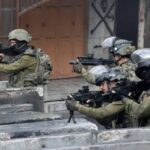
Responding, National Security Adviser, Mallam Nuhu Ribadu, said the Federal Government was intensifying military and law enforcement operations in affected areas. He stressed that Nigeria is a plural society where the protection of all citizens, regardless of faith, is non-negotiable, describing violence along religious lines as an attack on the Nigerian state.
Ribadu disclosed that President Bola Tinubu had authorised expanded security deployments, improved intelligence coordination and stronger investigations into attacks on religious communities. He added that the government was also developing a national database on deaths and casualties arising from violence to enhance accountability and evidence-based decision-making.
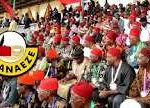
Meanwhile, the Southern and Middle Belt Leadership Forum (SMBLF) condemned the abduction, describing it as a reprehensible attack on innocent civilians. In a joint statement, leaders of Afenifere, the Middle Belt Forum, Ohanaeze Ndigbo Worldwide and the Pan Niger Delta Elders Forum criticised the initial denial of the incident by state officials, saying it undermined rescue efforts and emboldened the kidnappers. The forum called for the immediate rescue of the victims and a review of Kaduna State’s approach to dealing with banditry.
A resident of Kurmin Wali village, who identified himself as Godwin, said the community had been attacked repeatedly, describing the January 18 abduction as the 23rd attack on the area. He revealed that women, elderly persons and children were among those taken, adding that the attackers surrounded the churches and marched worshippers into the bush without firing gunshots.
Speaker of the House of Representatives, Abbas Tajudeen, condemned the attack and urged security agencies to ensure the safe rescue of the abducted worshippers, lamenting the growing trend of attacks on schools and places of worship.
Similarly, the Southern Kaduna People’s Union (SOKAPU) described the abduction as unacceptable and called for urgent government action, including the construction of access roads and the establishment of permanent security outposts in vulnerable communities.
Christian groups in Southern Kaduna also declared a two-day fasting and prayer programme, expressing anguish over what they described as an unprecedented attack involving worshippers from different denominations on the same day.
The African Democratic Congress (ADC), however, accused the Kaduna State Government and the Nigeria Police of prioritising public relations over citizens’ safety, alleging that the initial denial of the abduction amounted to a cover-up that undermined public trust and rescue efforts. The party called for transparent operations and an independent investigation into the handling of the incident.
Governor Uba Sani, on his part, vowed that his administration would not relent until all abducted persons were rescued. Speaking in an interview monitored in Kaduna, the governor said he was personally overseeing security operations and assured residents that the state government was working closely with security agencies to secure the victims’ release.