


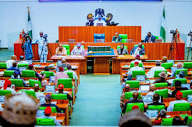
The House of Representatives has disowned the interim report prepared by the minority caucus’ ad hoc committee reviewing recently enacted tax laws, describing the process as procedurally invalid and lacking formal backing.
In a statement on Sunday, House spokesman Akin Rotimi clarified that, under the chamber’s Standing Orders, only the House in plenary or the Speaker has the authority to establish committees with official parliamentary status. “No political caucus, whether majority or minority, possesses the procedural authority to constitute a committee carrying parliamentary powers,” he said.
Rotimi acknowledged the role of political caucuses in consultation, coordination, and policy advocacy, but emphasized that they do not have investigative or oversight powers. “Any action taken by a caucus in this regard is non-binding, informal, and without legal or institutional consequence,” he added.
He further stated that reports produced by such caucus-led bodies cannot be presented to the House, recorded as parliamentary documents, or considered part of the National Assembly’s official legislative or oversight records. According to Rotimi, the minority caucus’ move risks creating public confusion, especially as the tax law matters have already been addressed through established legislative mechanisms.
The spokesman recalled that in December 2025, the House formed a bipartisan ad hoc committee to investigate concerns raised over multiple documents claiming to be official gazettes of the tax laws. “That committee, constituted in line with Standing Orders, remains active and will submit its report to the House upon completion,” Rotimi noted.
He added that the National Assembly has since published the official gazette and issued Certified True Copies (CTCs) of the tax laws, giving them full legal effect. “The National Assembly has formally disowned any unofficial documents circulating, reiterating that only gazetted versions and certified copies are legally valid,” Rotimi said.
The spokesman warned that creating parallel caucus-led committees and circulating interim reports could deepen public misunderstanding of an issue already resolved through official channels. He reaffirmed that transparency and accountability must operate strictly within constitutional and procedural frameworks.
“For clarity, only committees constituted by the House in plenary or by the Speaker have parliamentary authority,” Rotimi concluded, urging the public to view any other committee or report as a political initiative, not an official action of the House of Representatives.