

Christian leaders and human rights advocates have expressed deep concern over the escalating wave of religiously motivated killings across Nigeria, warning that persistent persecution and sectarian violence threaten the nation’s unity.
Speaking at a roundtable organised by the Christian Awareness Initiative of Nigeria (CHAIN) in Abuja on Wednesday, the participants cited alarming figures showing that no fewer than 16,769 Christians and 6,225 Muslims were killed between 2019 and 2023 in faith-related attacks nationwide.
With the theme “Building Synergy among Faith-Based NGOs for Freedom of Religion or Belief,” the roundtable brought together clerics, scholars, and rights advocates who called on the Federal Government to establish a National Council on Freedom of Religion to investigate and prosecute violators of citizens’ religious rights.
Delivering his address virtually, the President of the Para-Mallam Peace Foundation, Dr. Gideon Para-Mallam, said the data underscores the reality of widespread persecution in Nigeria, particularly against Christians. He lamented the culture of impunity surrounding mob killings in the name of blasphemy, noting that perpetrators are rarely brought to justice.
“Beyond the politics of numbers killed, the fact is that about 145 Catholic priests have lost their lives in recent years,” Para-Mallam said. “This isn’t exhaustive, but between 2019 and 2023, 16,769 Christians and 6,235 Muslims were documented as victims of religious killings.”
He criticized what he described as government “denialism” in acknowledging the scale of religious violence and urged the creation of a joint council of credible Christian and Muslim leaders to rebuild trust and end the bloodshed.
Also speaking, Dr. Sam Amadi, Convener of the Abuja School of Social and Political Thought and former Chairman of the Nigerian Electricity Regulatory Commission (NERC), said Nigeria could no longer be described as a neutral state as religion increasingly influences public policy and governance.
Amadi argued that Nigeria meets the criteria to be redesignated by the United States as a Country of Particular Concern due to persistent violations of religious freedom. “If you look at reports from Open Doors, Nigeria is one of the worst places for Christians to live,” he said. “Many Christians have held positions of power, yet persecution continues.”
He warned that by allowing religious doctrines to influence state laws, Nigeria had eroded the secular foundation of its constitution, unlike nations such as Malaysia and Indonesia that maintain clearer boundaries between religion and the state.
Amadi proposed the establishment of a Special Council on Freedom of Religion with full autonomy to investigate and prosecute offenders, saying only justice for victims can heal the nation’s divisions.
In his remarks, Rev. John Joseph Hayab, Chief Executive of CHAIN, cautioned that peace will remain elusive unless the government enforces justice for all victims of faith-based violence.
“Whenever a Christian is killed, we hear excuses; when a Muslim is attacked, we also hear excuses. Justice must not depend on who the victim is,” Hayab said, blaming selective prosecution for emboldening extremists and deepening mistrust between communities.
Similarly, Joseph Danboyi, Head of the National Directorate of Religious Freedom at the Christian Lawyers Fellowship of Nigeria (CLASFON), described Nigeria’s blasphemy laws as a major threat to national cohesion and freedom of expression. He faulted weak prosecution and bias in the justice system for the growing frequency of religious violence.
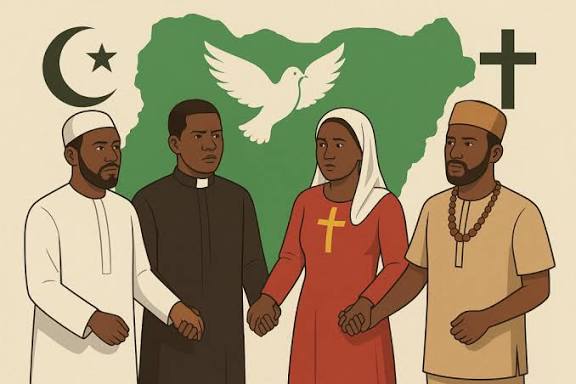
The leaders collectively urged the government and faith communities to collaborate in dismantling the roots of intolerance, promoting peaceful coexistence, and ensuring equal protection for every Nigerian, regardless of belief.