

Two federal judges have ordered the Trump administration to resume food assistance for millions of Americans, ruling that the White House cannot suspend Supplemental Nutrition Assistance Program (SNAP) benefits despite the ongoing government shutdown.
The rulings, issued by judges in Massachusetts and Rhode Island, direct the government to use emergency contingency funds to ensure low-income households continue receiving monthly food aid. The shutdown, now entering its second month, has disrupted several federal programs and left millions struggling to access essential services.
SNAP, commonly known as food stamps, provides electronic debit cards to about 42 million Americans for grocery purchases. The average family of four receives approximately $715 per month, or about $6 per person per day. Although states administer the programme, federal funding has been suspended since October 1, when the shutdown began.
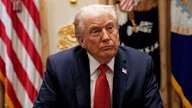
President Donald Trump said on Truth Social that he had directed government lawyers to seek court guidance on how to legally restore the programme, acknowledging that even with quick approval, “it will unfortunately be delayed.”
Several states sued the administration after the U.S. Department of Agriculture (USDA) announced it would halt food aid in November, claiming that “the well has run dry.” The states argued the government should instead draw from its $6 billion emergency contingency fund to continue payments.
In her decision, Judge Indira Talwani of Massachusetts ruled that the states were likely to succeed in their claim that Congress intended SNAP to continue—at a reduced rate if necessary—during funding lapses. She ordered the administration to access the contingency fund and report by Monday on whether at least partial November benefits would be distributed.
Judge Talwani also held that the USDA “erred in concluding” it was legally barred from using emergency reserves during a shutdown.
Separately, Judge John J. McConnell Jr. in Rhode Island ordered the administration to make full SNAP payments by November 3, using either the contingency fund or a $23 billion reserve established under the Agricultural Adjustment Act of 1935. If the government fails to comply, he directed that partial payments be made by November 5.
The USDA has yet to comment on the rulings. Treasury Secretary Scott Bessent told CNN that payments “could be made as soon as Wednesday,” though he noted that administrative procedures still had to be followed.
The shutdown, triggered by a budget standoff between Republicans and Democrats, has heightened uncertainty for millions dependent on federal aid. The National Parents Union condemned the suspension of benefits, describing it as “a moral disgrace and a direct assault on America’s working families.”
Experts warn that even if contingency funds are used, they could only cover about 60% of beneficiaries for one month, urging Congress and the White House to resolve the impasse before the situation worsens.