

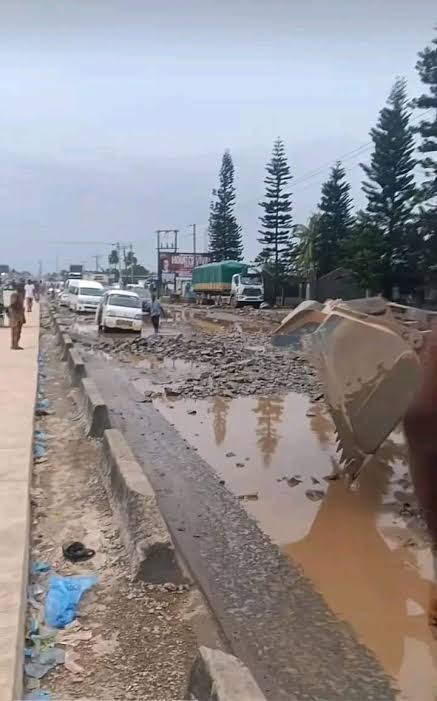
Business operators and residents along the Benin-Sapele road have decried the slow pace of rehabilitation works on the critical corridor, describing the situation as a daily nightmare.
The stretch of road, from the bypass area to the Ologbo-Koko junction, first began to show signs of failure in 2018, following poor drainage design and lack of maintenance. Rehabilitation initially handled by Levant Construction Firm was later taken over by the Edo State Government, which has completed 5.5 kilometres of stone-based and reinforced concrete pavement.
However, political disagreements between the state and federal governments over palliative interventions left the road in near impassable condition, despite its role in linking the South-West to the South-South.
A resident of Ogheghe, Igbinovia Lucky, said commuting had become unbearable since he moved to the area in 2022.
“Most times, a journey that should take 30 to 45 minutes lasts up to five or six hours, just from my workplace at the government secretariat to Ogheghe,” he said.
Transporter, Sunday Ochuko, noted that the poor state of the road has increased accident risks, as trucks frequently tip over, break down or get stuck for days. He added that insecurity, including theft and kidnappings, had worsened along the route.
“Vehicles suffer more wear and tear, and motorists spend heavily on fuel and repairs,” he said.
A fruit trader, who commutes between Benin and Sapele, lamented that delays often led to spoilage and loss of goods. She added that transporters’ increased fares force sellers to hike prices, raising overall costs for consumers.
“Businesses and individuals lose valuable hours. What should be a one-hour trip now takes five or six, reducing trips, cutting work hours, and disrupting supply chains,” she said.
At the Ologbo end of the road, a business owner explained that passenger fares had nearly doubled while operators could only make fewer trips daily.
“Patronage is low because the road takes too much time. Vehicles break down often, and goods get damaged,” the business owner lamented.
Stakeholders fear the slow progress threatens trade and economic competitiveness between Edo and Delta states, given the corridor’s importance for regional commerce.